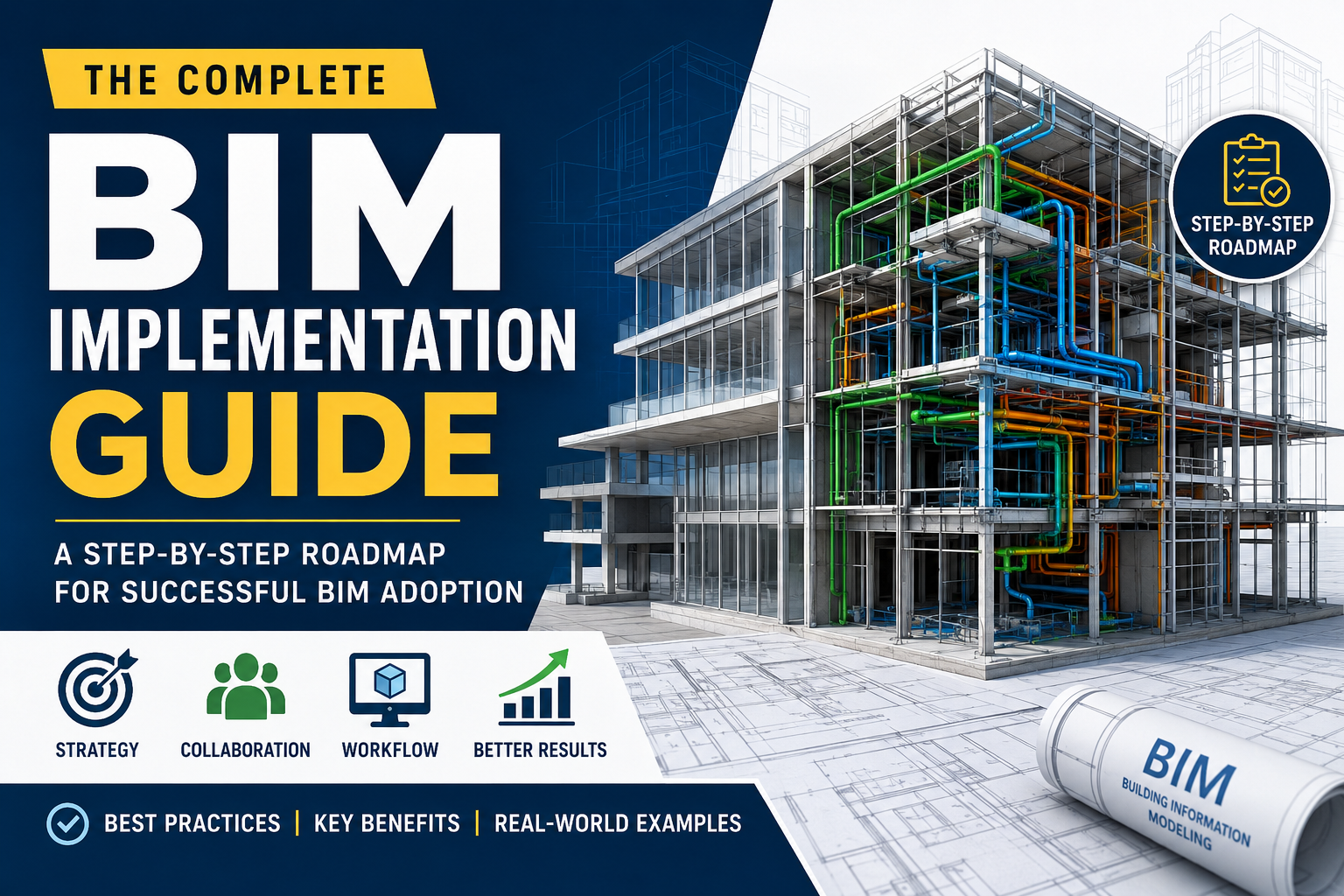
Building Information Modeling (BIM) has transformed the architecture, engineering, and construction (AEC) industry. Companies that once relied on disconnected drawings and manual coordination are now embracing intelligent 3D models that improve collaboration, reduce errors, and accelerate project delivery.
However, purchasing BIM software alone does not guarantee success. A structured implementation strategy is essential for achieving measurable results.
This BIM Implementation Guide walks you through the complete process—from planning and software selection to team training and project execution.
BIM implementation is the process of integrating Building Information Modeling into an organization's workflows, technology, and project delivery methods.
Rather than simply creating 3D models, implementation focuses on building a collaborative digital environment where architects, engineers, contractors, and owners work from a shared source of project information.
Successful BIM implementation includes:
•Defining organizational goals
•Selecting appropriate software
•Establishing BIM standards
•Training project teams
•Developing execution plans
•Measuring project performance
•Why BIM Implementation Matters
Construction projects often face issues such as:
•Design conflicts
•Budget overruns
•Project delays
•Poor communication
•Rework
BIM addresses these problems by creating a centralized digital model where every stakeholder has access to accurate, real-time information.
Organizations that adopt BIM effectively often experience:
Improved coordination
Better decision-making
Reduced project risks
Increased productivity
Higher client satisfaction
Benefits of BIM Implementation
Better Collaboration
Architects, structural engineers, and MEP teams work on coordinated models, reducing communication gaps.
Clash Detection
Potential conflicts between building systems are identified before construction begins, minimizing costly rework.
Improved Cost Control:
Accurate quantity takeoffs and cost estimation help manage budgets throughout the project lifecycle.
Faster Project Delivery:
Automated documentation and coordinated workflows reduce delays and improve efficiency.
Better Facility Management:
The BIM model remains valuable after construction by supporting maintenance and asset management.
Step-by-Step BIM Implementation Guide
Step 1: Define Business Goals:
Start by identifying why your organization wants to adopt BIM.
Typical objectives include:
Reducing project delays
Improving design accuracy
Increasing collaboration
Winning larger projects
Meeting client requirements
Clear goals help shape your implementation strategy.
Step 2: Assess Current Workflows:
Evaluate existing processes and identify inefficiencies.
Ask questions such as:
How are drawings currently managed?
Where do communication breakdowns occur?
Which tasks consume excessive time?
What causes project delays?
Understanding current challenges helps prioritize improvements.
Step 3: Choose the Right BIM Software:
Popular BIM solutions include:
Software Best For Autodesk Revit Architectural & MEP Modeling,
Navisworks Clash Detection,
Autodesk Construction Cloud Collaboration,
BIM 360 Project Management,
Tekla Structures, Structural Steel,
Archicad Architectural Design
Choose software based on project requirements, team expertise, and budget.
Step 4: Develop BIM Standards:
•Consistency is critical.
•Create standards for:
•Naming conventions
•Model organization
•Level of Development (LOD)
•File management
•Documentation
•Quality control
Standardization improves collaboration across teams.
Step 5: Create a BIM Execution Plan (BEP):
The BIM Execution Plan defines how BIM will be used throughout the project.
A comprehensive BEP includes:
•Project objectives
•Team responsibilities
•Model sharing procedures
•Collaboration methods
•Quality assurance
•Data exchange protocols
•Delivery milestones
Step 6: Train Your Team
Technology alone does not guarantee success.
Invest in:
•Revit training
•Clash detection workflows
•Coordination meetings
•BIM standards
•Collaboration tools
Continuous learning ensures long-term success.
Step 7: Start with a Pilot Project:
Avoid implementing BIM across every project immediately.
Choose a manageable pilot project to:
•Test workflows
•Identify challenges
•Gather feedback
•Improve standards
Lessons learned can then be applied to larger projects.
Step 8: Measure Performance:
Track key performance indicators (KPIs) such as:
•Clash reduction
•RFIs
•Project delivery time
•Rework costs
•Client satisfaction
•Model accuracy
Data-driven improvements strengthen future projects.
BIM Levels and Standards:
A successful BIM implementation should align with recognized standards and Levels of Development (LOD).
Common LOD stages include:
LOD 100 – Conceptual Design
LOD 200 – Approximate Geometry
LOD 300 – Accurate Design
LOD 350 – Coordination
LOD 400 – Fabrication
LOD 500 – As-Built Model
Selecting the appropriate LOD depends on project requirements and contractual obligations.
Common BIM Implementation Challenges
Many organizations encounter obstacles during BIM adoption.
These include:
•Resistance to change
•Lack of training
•Poor communication
•Inconsistent standards
•Software compatibility issues
•Limited management support
Addressing these challenges early significantly improves implementation success.
Best Practices
Successful BIM organizations consistently
follow these best practices:
•Develop clear BIM standards.
•Invest in ongoing training.
•Standardize project templates.
•Use cloud collaboration platforms.
•Conduct regular coordination meetings.
•Perform routine model audits.
•Encourage continuous improvement.
•Real-World Example
A commercial office project involving architectural, structural, and MEP teams experienced frequent coordination issues during design.
After implementing BIM:
Design clashes were identified before construction.
Coordination meetings became more productive.
Rework on-site was significantly reduced.
Project documentation became more consistent.
The project was delivered more efficiently with improved collaboration across disciplines.
BIM Implementation Checklist
Before starting your next project, confirm the following:
Define BIM objectives:
Select appropriate software
Create BIM standards
Develop a BIM Execution Plan
Train project teams
Launch a pilot project
Monitor KPIs
Improve workflows continuously
Frequently Asked Questions
What is BIM implementation?
BIM implementation is the process of integrating Building Information Modeling into an organization's workflows, software, standards, and project management practices.
1.How long does BIM implementation take?
Depending on the organization's size and complexity, implementation can take several months to over a year, with continuous refinement over time.
2.Which software is best for BIM?
Popular options include Autodesk Revit, Navisworks, Autodesk Construction Cloud, Tekla Structures, and Archicad. The best choice depends on project requirements and organizational goals.
3.Why is a BIM Execution Plan important?
A BIM Execution Plan establishes project objectives, responsibilities, collaboration procedures, and quality standards, ensuring all stakeholders work consistently.
4.Can small companies implement BIM?
Yes. Many small and medium-sized firms successfully adopt BIM by starting with pilot projects and scaling gradually.
Implementing BIM is more than adopting new software—it's about transforming the way teams collaborate, communicate, and deliver projects. A thoughtful implementation strategy helps reduce risk, improve coordination, and create long-term value for owners, designers, and contractors alike.
Whether you're just beginning your BIM journey or refining an existing workflow, investing in clear standards, team training, and continuous improvement will position your organization for greater efficiency and success.
Ready to Implement BIM Successfully?
At Eminent BIM Services, we help architecture, engineering, and construction professionals streamline project delivery with high-quality BIM solutions, including:
•BIM Modeling (LOD 100–500)
•Architectural BIM
•Structural BIM
•MEP BIM
•Clash Detection
•Scan to BIM
•Shop Drawings
•BIM Coordination
Contact our team today to discover how expert BIM implementation can improve collaboration, reduce costs, and enhance project outcomes.